
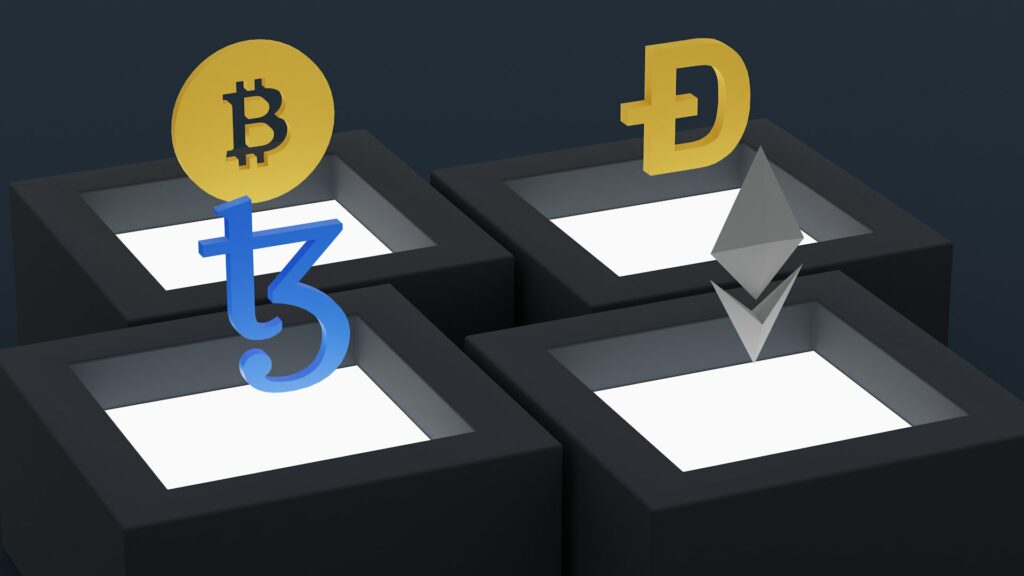
What is Decentralized Finance (DeFi) & How Does It Work?
As traditional finance continues to face disruption and criticism, a new player is emerging on the scene – Decentralized Finance, or DeFi. Moving forward, DeFi has the potential to transform banking and financial services as we know them, utilizing blockchain technology and smart contracts, offering greater transparency, accessibility, and efficiency. But what exactly is DeFi, how does it differ from traditional finance, and what other benefits, use cases, and dynamics does it bring?
Hendrith Vanlon Smith Jr’s words encapsulate the unprecedented value of DeFi for our society, maintaining: “The Decentralization of Finance is really good for humanity, and it’s ultimately a win for each and every one of us. Because now that we can circumvent banks, exchanges, and brokerage companies by using smart contracts on the blockchain… every person, family, and business will experience more liberty, freedom, opportunities, abundance, and power, and more wealth.”
In this article, we will explore the world of DeFi, its benefits and challenges, and the potential impact it could have on the future of finance.
What Is DeFi?
Arising as a novel framework for our financial system, decentralized finance (DeFi) represents an up-and-coming financial technology built on encrypted distributed ledgers, much like those used by cryptocurrencies, for users of DeFi, banking, and other financial services are provided free of charge. DeFi allows users to save their money in an encrypted digital wallet, make instantaneous international money transfers, and purchase from any computer with an internet connection.
Unique DeFi users increased by 40% in 2022, as estimated by Nansen. Despite market difficulties, the number of DeFi customers has risen from 4.7 million at the beginning of 2022 to over 6.5 million by the end of the same year. The number of unique DeFi customers has climbed by over 700% over two years, reaching 940,000 at the beginning of 2021.
Just like the thrill of hitting the jackpot at Icecasino, where everyone has an opportunity to make it with a huge amount of bonuses and playing slots, the DeFi landscape is experiencing exponential growth, drawing in a multitude of users seeking innovative financial opportunities and seamless transactions in the online realm
DeFi is an innovative financial system that uses blockchain technology to create a transparent and secure environment for financial transactions. Its decentralized nature eliminates the need for intermediaries, which makes transactions faster, cheaper, and more accessible to everyone. As DeFi continues to grow, it has the potential to transform the traditional finance industry and bring financial services to a broader audience.
- Decentralized – DeFi applications operate without centralized institutions, and the code governs the entire process. Changes to the code are often decided democratically through community governance voting.
- Open & Permissionless – Anyone with an internet connection can access DeFi applications. Users can either utilize existing applications or create their own DeFi applications without any restrictions.
- Transparent – All the code that controls DeFi applications is transparent to every user on the blockchain network. It enables users to verify and audit the service whenever they want.
- User-centric – DeFi applications are designed to incentivize users to participate in their services. For example, users can earn rewards for providing liquidity for lending. Moreover, users can access the service through their own custom interface or a publicly hosted one.
- Interoperable – DeFi services are natively interoperable with each other, thanks to the shared blockchain network on which they exist. The adoption of cross-blockchain interoperability networks will further strengthen this phenomenon.
- Composable – With broad interoperability, unique DeFi protocols and services can be combined to enhance the user experience or act as building blocks to compose entirely new applications that offer even more value to users.
Centralized Finance versus Decentralized Finance
To understand the potential and revolution brought by DeFi, it is important to understand how it aims to address the challenges of its traditional counterpart, which represents the status quo in our society: centralized finance. DeFi operates on a peer-to-peer network that removes intermediaries and enables more financial independence for people than the centralized model used in conventional banking, in which banks and third-party intermediaries retain and transfer money.
Banks and other payment processors are essential in facilitating financial transactions in centralized financial systems. To complete a purchase using a credit or debit card, the transaction must first pass through many middlemen, who will each take a cut of the transaction total. This procedure includes the issuer, the acquiring bank, the credit card network, and the merchant. This approach frequently takes longer than desired, costs more money, and is not always transparent.
According to Grand View Research, from 2023 to 2030, the worldwide market for decentralized finance is projected to increase from a 2022 valuation of USD 13.61 billion at a CAGR (compound annual growth rate) of 46.0%.
Restricted access to financial services is another disadvantage of a centralized financial system. Many people, particularly those living in economically depressed areas without an established credit history, lack access to mainstream financial institutions. Moreover, consumers are at risk for security breaches and financial losses due to fraud and security flaws in centralized financial systems.
Overall, Peer-to-peer (P2P) networking technology underpins DeFi, which eliminates the need to integrate middlemen, putting the power in the hands of individual users instead. Blockchain technology records and verifies monetary transactions, eliminating the need for intermediaries while increasing transparency and security. Anyone may use DeFi to securely lend, borrow, trade, and store digital assets between themselves without the need for a central repository or intermediary.
DeFi’s universal availability means that it may be used by everyone, regardless of where they are or their financial standing, so long as they have access to the internet. As a result, millions of people who previously had access to financial services may now benefit from them. DeFi deals are often completed in less time and at a lower cost than traditional monetary dealings.
DeFi also has the added benefit of making your financial transactions more private and secure. Users have more say over their data and may safeguard their digital assets via wallets and security standards, even though all their transactions can be tracked.
How is DeFi intertwined with Blockchain & CryptoCurrency?
This system allows users to transact without intermediaries like traditional financial institutions. DeFi applications use blockchain technology to create smart contracts that automate the execution of transactions, which eliminates the need for third-party intermediaries.
Blockchain technology is essential to the functioning of DeFi because it provides a distributed and secure ledger that records all transactions on the network. Blockchain technology is a database stored on multiple computers rather than a centralized server. Each time a transaction occurs, it is recorded on the blockchain and verified by the network of computers. This verification process ensures that transactions are secure and cannot be tampered with. Most DeFi applications are built on the Ethereum blockchain platform designed to support smart contracts. Other blockchain platforms like Cardano, Binance, and Solana are also quickly developing similar applications.
Cryptocurrencies are also crucial to DeFi because they provide a means of exchange for transactions on the network. Cryptocurrencies like Bitcoin and Ethereum are digital currencies that use blockchain technology to record and verify transactions. Like traditional currencies, they can be used to send and receive payments on the DeFi network. The primary difference is that cryptocurrencies are decentralized, meaning they are not controlled by any central authority, giving users greater control over their assets.
Smart contracts represent another critical component of DeFi. Smart contracts are elf-executing programs that automatically execute the terms of an agreement when certain conditions are met. They are essential to the functioning of DeFi because they eliminate the need for intermediaries like banks, lawyers, and other financial institutions. Smart contracts are used to automate financial agreements like loans, insurance policies, and other financial transactions.
DeFi is intertwined with blockchain technology and cryptocurrencies because these technologies provide the building blocks for a decentralized financial system.
- Transactions – In a DeFi system, all transactions are recorded on a distributed and secure database or ledger, representing the unit of blockchain technology. The blockchain is a computer network that works together to maintain and verify the authenticity of all transactions. Transactions are recorded in blocks, which are secured using complex cryptographic algorithms. Once a block is closed and encrypted, it cannot be altered, ensuring the blockchain’s integrity.
- dApps – DeFi uses dApps, or decentralized applications, to handle transactions and run the blockchain. These applications are built on the blockchain and designed to execute smart contracts automatically. Smart contracts are self-executing contracts with the terms of the agreement between buyer and seller being directly written into code. Once a smart contract is deployed, it cannot be altered, which makes it tamper-proof and secure.
- P2P – In a DeFi ecosystem, participants directly transact with each other, while blockchain technology secures the finalization of the transactions. Most DeFi products don’t take custody of your funds, allowing you to remain in control of your assets. To access DeFi, users need to have a secure digital wallet. The wallet allows users to initiate transactions through smart contracts, which means that both parties agree to several specific conditions.
What are the Benefits of DeFi?
Powered by the unprecedented technological capabilities and unrestrained dynamics between users, DeFi offers a plethora of benefits, which are further explained:
Enhanced Access to Financial Services – Those who are unbanked or underbanked have better access to financial services because of DeFi. DeFi’s customers don’t have to establish local bank accounts or utilize a credit card to access banking services since the platform is decentralized. Those who, for reasons of location, poverty, or lack of identity, cannot use conventional banking services will find this vital.
Minimizing Transaction Fees – In comparison to more conventional forms of financing, DeFi may drastically cut down on transaction fees. Fees are paid to financial middlemen in traditional finance, such as banks and brokers. With big transactions, these costs may rapidly pile up. Since DeFi does away with intermediaries, users may conduct transactions at a reduced cost.
Ownership Power for Individuals – DeFi gives customers more power over their possessions. While dealing with a traditional bank, customers may encounter limitations on how their money may be accessed and spent. On the other side, DeFi ensures that the user never loses data ownership. The user’s assets are stored in a digital wallet, which may be accessed from any computer. They may also make direct asset transfers to other network members without going via any third parties.
Improved Transparency – In contrast to more conventional forms of financing, DeFi is more open and honest. Due to the distributed nature of the DeFi network, all transactions are recorded on the blockchain, making for a verifiable and unchangeable ledger of economic activity. As consumers can see how their assets are being utilized, confidence in the DeFi ecosystem may be fostered via this openness.
Automated Financial Agreements – DeFi uses smart contracts to automate monetary agreements. A smart contract is a computer software that, if certain circumstances are satisfied, will carry out the terms of an agreement by itself. Because of this automation, monetary dealings may be completed without the delay and inefficiency often associated with middlemen like banks and attorneys.
Better Security – When it comes to safety, nothing compares to the blockchain technology upon which DeFi is based. Implementing cryptographic protocols in blockchain technology guarantees the integrity of all financial transactions. Having such a safe and secure environment is crucial for the success of the DeFi network.
Common Use Cases of DeFi
DeFi offers a range of use cases allowing users to manage their digital asset finances without relying on traditional financial institutions. However, due diligence is required, as the space also has numerous scams.
Regulatory Compliance and KYT – So far, the fight against money laundering and terrorism financing has long been a concern for the traditional financial system, which has relied on the Know Your Customer (KYC) protocols. However, KYC often conflicts with privacy guidelines. In contrast, Decentralized Finance (DeFi) emphasizes the Know Your Transaction (KYT) protocol. KYT focuses on monitoring the nature of transactions rather than the identity of the parties involved. This real-time transaction monitoring helps protect against fraud and other financial irregularities.
- Decentralized Autonomous Organizations (DAOs) – Representing core institutional units in the DeFi ecosystem, DAOs are organizations that operate based on rules laid down in smart contracts on the Ethereum platform. They do not require any central administrative entity to function. Various entities within DeFi, such as Compound and Maker, have introduced DAOs for fundraising, decentralized governance, and managing financial operations.
- Data and Analytics – Transparency is a hallmark of DeFi protocols, allowing access to all network data and transaction activities. This data is analyzed to make informed business decisions, identify new financial opportunities, and manage risk.
- Open Lending – These platforms are one of the most common use cases for DeFi, allowing users to either lend their digital assets out to other users to earn interest or borrow digital assets from other users, paying interest on top. Collateral worth more than the loan amount must be deposited to protect the borrower, and a loan-to-value ratio must be maintained.
- Stablecoins – Stablecoins represent digital assets with their value pegged to another asset to reduce volatility. They are popular among lenders, borrowers, liquidity providers, and traders due to their stability. Decentralized exchanges (DEXs) are digital asset trading platforms that operate without a centralized authority. DEXs may have a bid/ask system or use automatic market makers (AMMs) to set the price of tokens in a liquidity pool.
- Synthetic Asset Issuance – This entails creating a digital asset token that mimics the properties of something else. These assets can represent almost anything, including precious metals, other commodities, digital assets, stocks, and derivatives. Yield farming (or liquidity mining) involves locking up digital assets in return for rewards, while staking involves helping to participate in the network governance of Proof-of-Stake (POS) blockchains.
- Insurance – Decentralized insurance platforms provide similar functionality to traditional insurance brokers, allowing users to hedge against rare or potentially devastating events. Unlike traditional insurers, decentralized insurance enables a pool of investors to share the risk among themselves in return for the insurance premium.
What is the future look like for DeFi?
Considering the versatility and innovation sustained by DeFi, the future holds great promise as we witness the transformation of financial and economic services powered by DeFi.
In 2023, we can expect a significant acceleration of this trend, as DeFi I is poised to become as indispensable as the internet, seamlessly woven into the fabric of our daily lives, providing mobility, flexibility, efficiency, and connectivity. Just as we don’t question the workings of the internet or its utility, we will come to
DeFi products and services, with the proper audits and monitoring in place, will become compliant and secure as the technology progresses and projects are properly tested and analyzed, protecting users’ security and privacy. For any technology to enter the mainstream, this is a must.
As we’ve seen with artificial intelligence and machine learning in FinTech, disruptive technologies have the power to transform the financial industry by challenging traditional models and introducing new ways of doing business. DeFi is no different. By leveraging blockchain technology and decentralized networks, DeFi is poised to disrupt banking and financial services in much the same way as the robo-advisor did for wealth management.
DeFi protocols enable individuals and businesses to lend and borrow money without intermediaries like banks by creating an open, transparent, and decentralized system. This not only lowers costs for borrowers but also provides new opportunities for lenders to earn a return on their investment.
In the end, forward-thinking businesses must keep a close eye on the DeFi landscape and be prepared to adapt to the changing financial landscape. The disruption that DeFi brings may be daunting, but it also presents exciting opportunities for innovation and growth.
Ultimately, DeFi isn’t just a nice concept – instead, it’s a real change process happening right now.